How does Raleigh stack up against MLB Expansion Front-Runners: Nashville & Salt Lake City?

With the MLB season over, it’s time we start digging a little more into the expansion landscape. What regions will MLB be targeting when they add 2 new teams and how do we stack up?

Let’s dive in…

First, let’s set the stage. MLB wants to add 2 new teams. Most insiders believe they want to add one in the East and one in the West. At this moment, the presumed front-runners are Salt Lake City in the West and Nashville in the East.
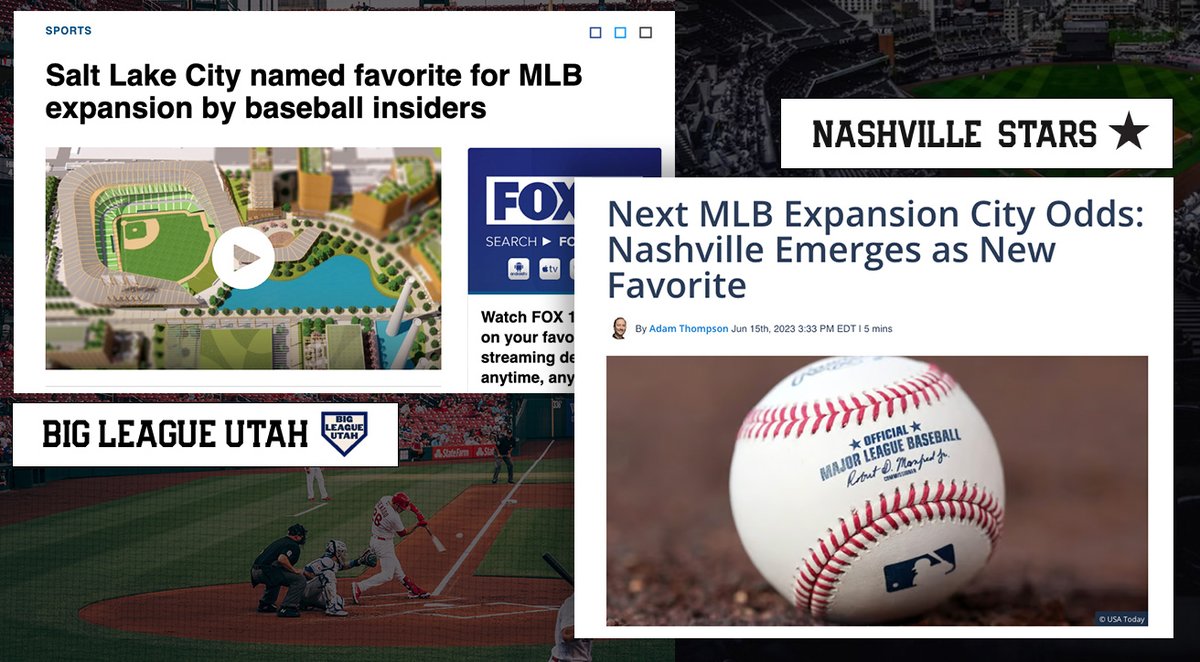
Since Raleigh’s direct competition will be Nashville, let’s focus on them… When they launched (2019), Nashville was the first money-backed venture on the East Coast, vaulting them into front-runner status. But are they really the best East Coast market for MLB expansion?
Image

Let’s first look at market metrics.

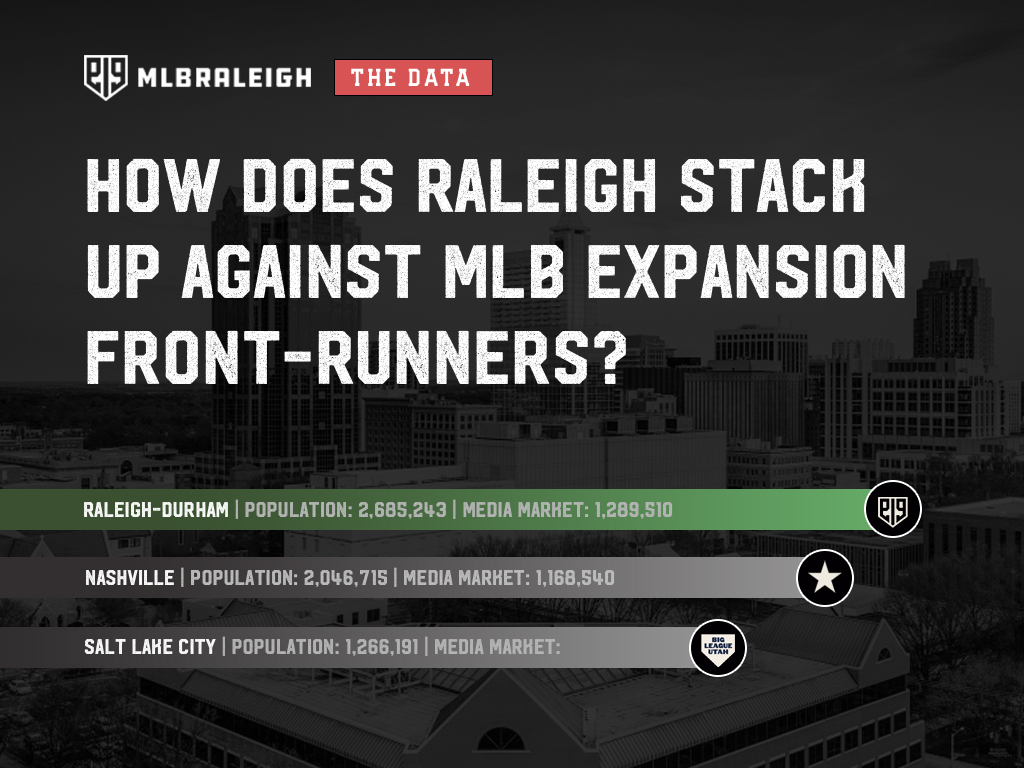
POPULATION:
To have a thriving MLB franchise you need to fill seats, and to do that, you need a strong population base.

While Nashville’s national brand might have you think they’re the larger market, they actually are not.
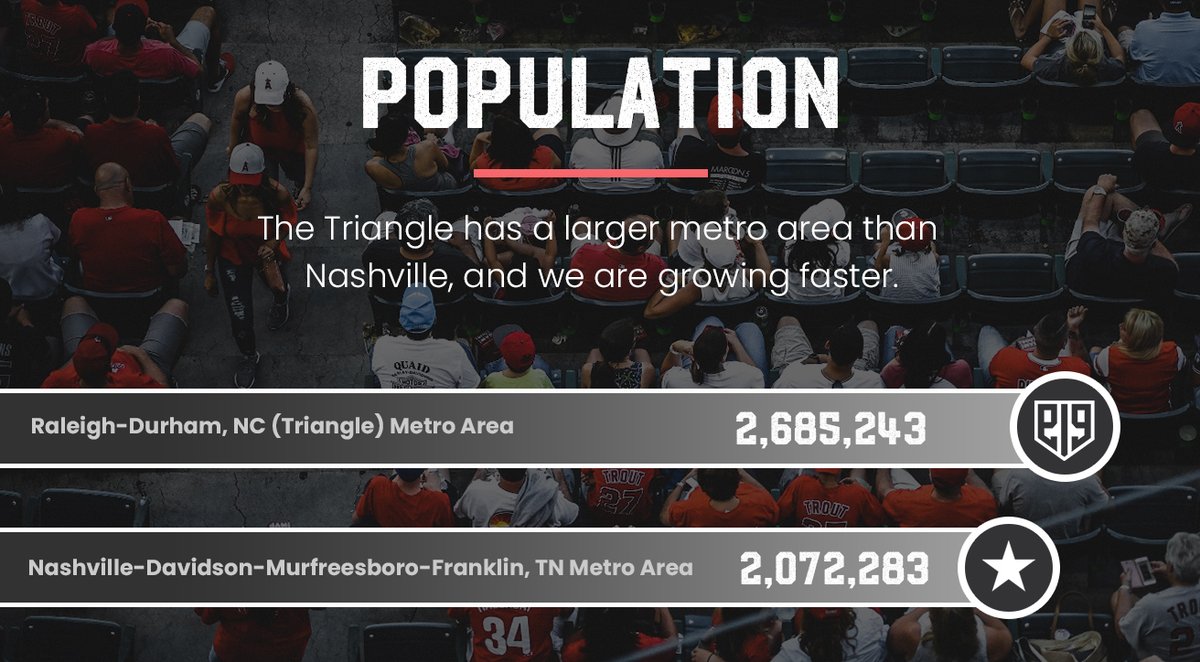
So we’re bigger, but for MLB teams, it’s media market that drives revenue.

MEDIA MARKET:
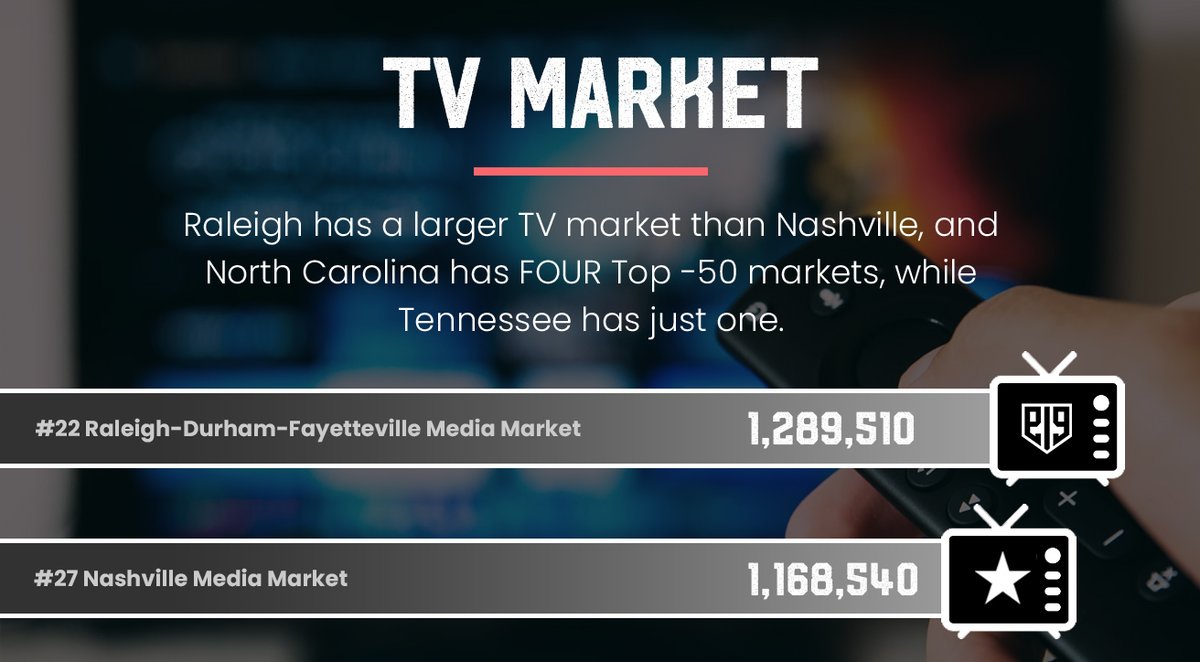
Luckily for us, we’re ahead there as well. Our media market ranks #22 overall, while Nashville’s comes in at #27.

Meanwhile, NC has 4 Top-50 media markets, while Tennessee has just one.
VISITORS:
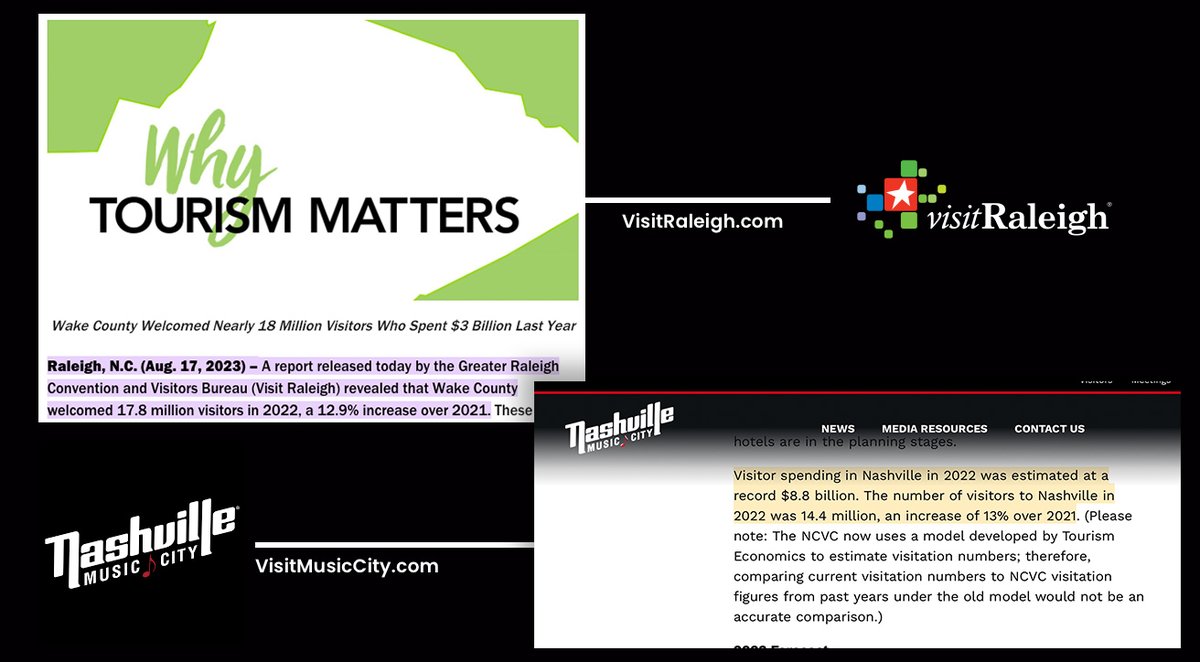
Now for the real shock. Wake County had more visitors (17.8M) in 2022 than Nashville (14.4M).

Yes, Nashville’s visitor spend is massive, but remember they also have NFL, MLS, NASCAR, MiLB & one of the largest music streets in America for folks to spend their money.
BILLIONAIRE INVESTORS:
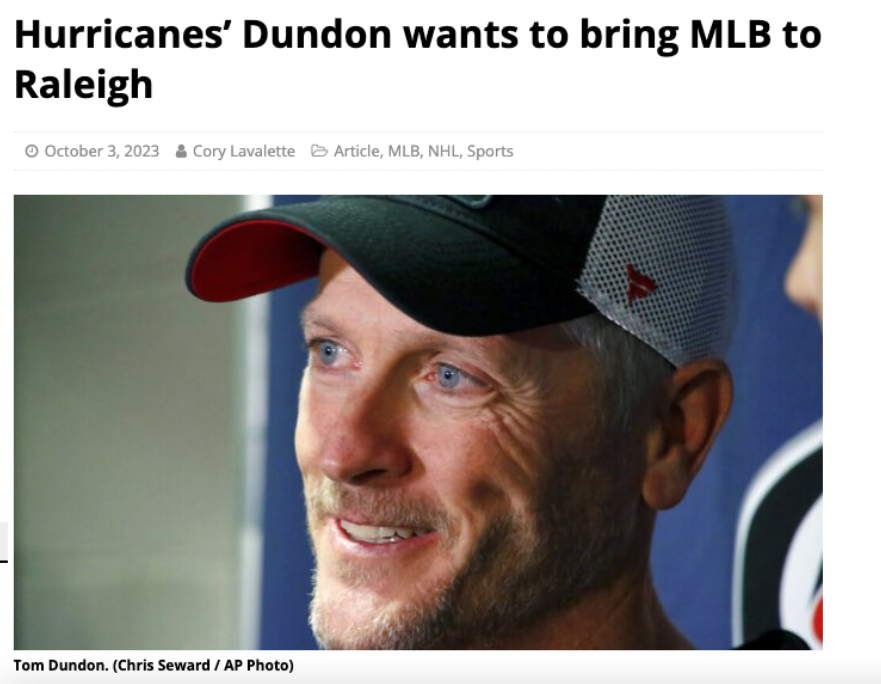
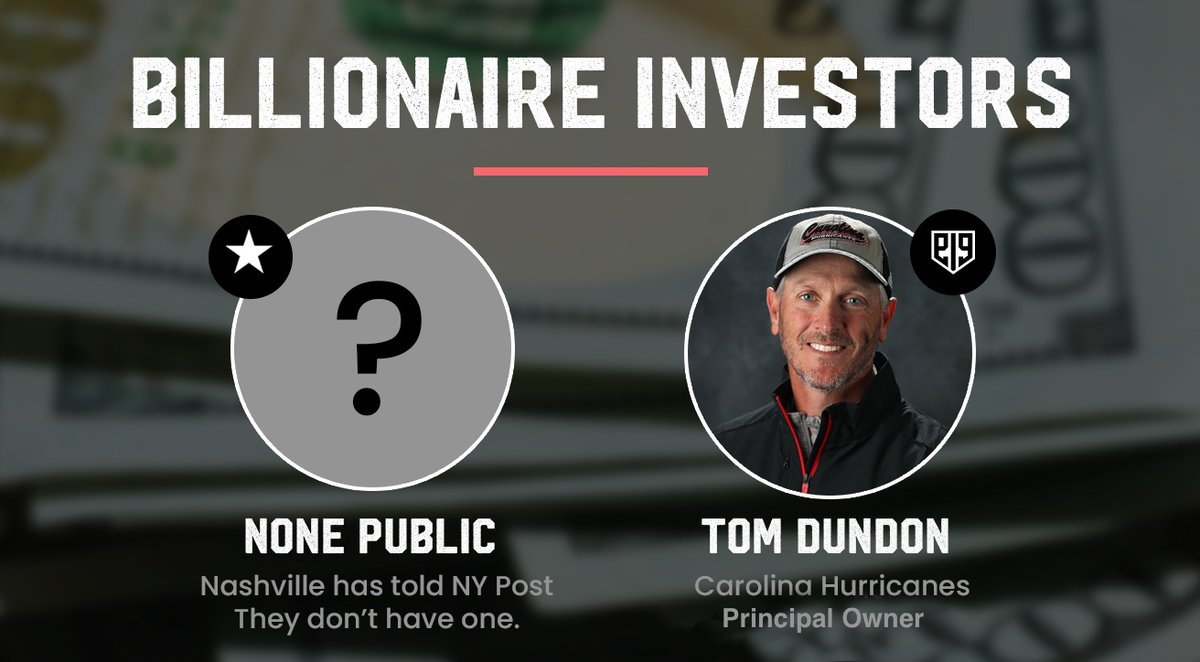
Tom Dundon has stepped up to lead the push here in NC, while Nashville has yet to name one. In fact, they told the NYPost

“I’m not sure that we need a billionaire investor to make this thing happen.”

Maybe not, but that would be unprecedented.

If you’re not going to have a billionaire, then you’re likely going to have to rely heavily on public funding.

But that’s no sure bet in Nashville either.

The city just approved funding for a $1.2 billion NFL stadium, & that’s on the heels of $257 million for an MLS stadium.
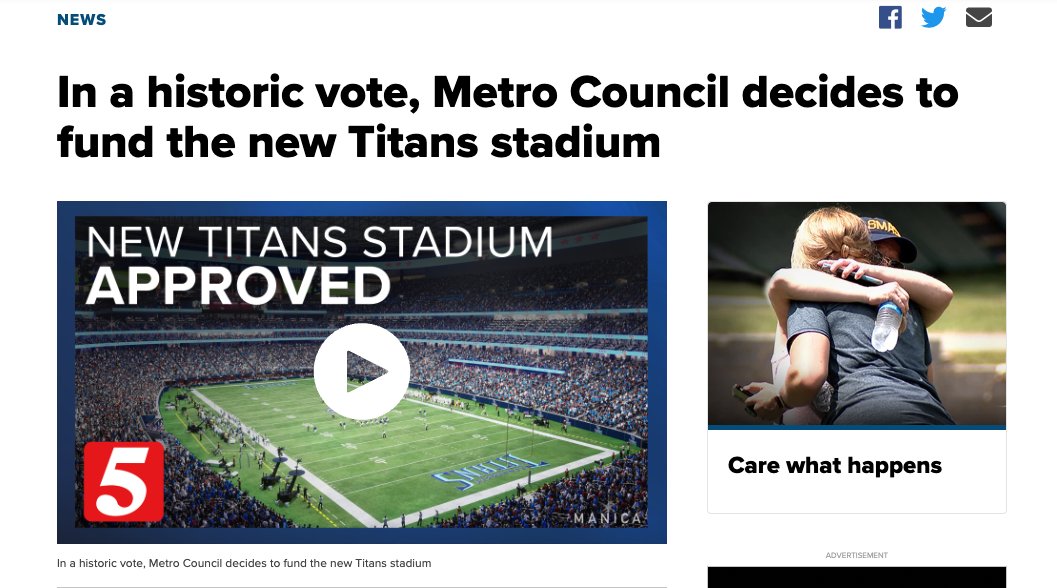
n fact, the NYPost said this…

“Since the city of Nashville has helped fund a new Titans & MLS stadium, the political will to throw public dollars behind another stadium doesn’t exist. Loar brought up the possibility that the state could help, but they can’t bank on that.”

Image

So while Nashville may have celebrity endorsements & a more notable national brand, behind the scenes, the Raleigh market looks stronger in almost every metric.

And if the NYPost reporting is correct, Dundon’s NC push may actually be the option with more legs & fewer barriers.

But we still have a long way to go until teams are awarded.

Things could/will change for all of the expansion hopefuls.

However, at this very moment, despite the media narrative, Raleigh may actually be the market best positioned to land an MLB franchise.
Pro Sports Expansion in Raleigh: We’ve been here before

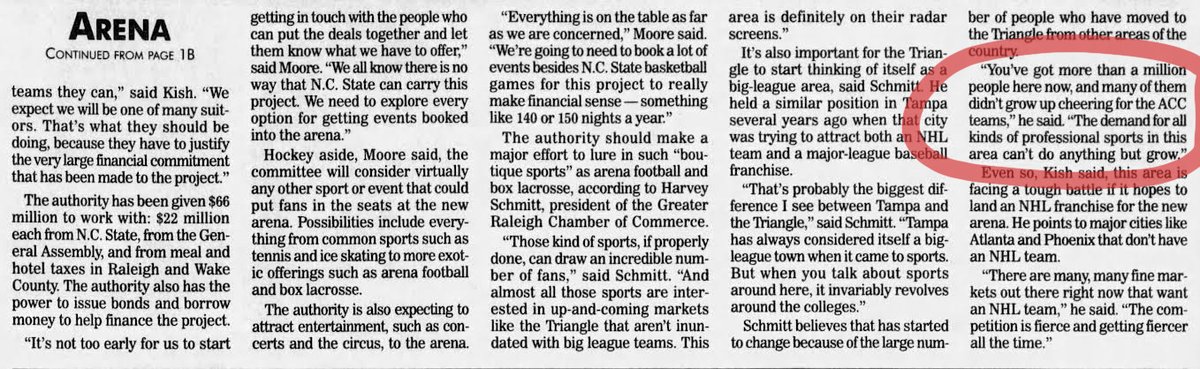
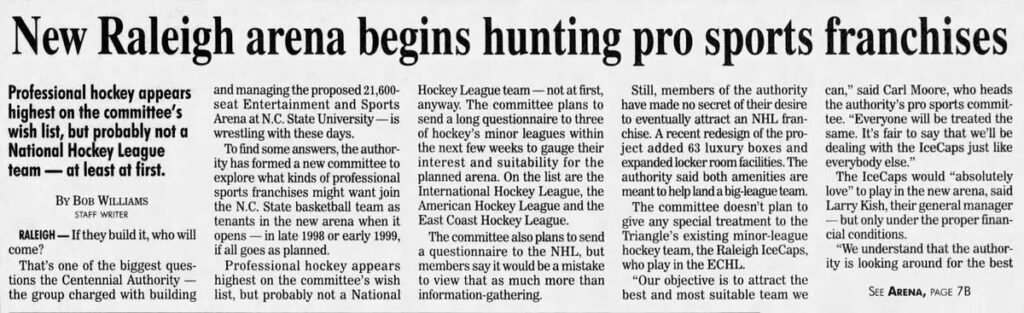
Tom Dundon wanting to bring MLB to Raleigh feels like unchartered territory, but we’ve been in a similar situation before. Let’s go back to 1996, when a ‘New Raleigh arena begins hunting for pro sports franchises.’

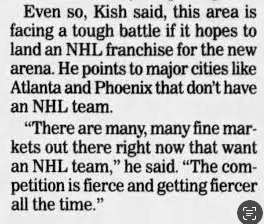
What did the Raleigh-Durham landscape look like in 1996? The population was about 1 million strong (for the Triangle Metro). The two smallest US markets in the NHL at the time were San Jose (1,474,000) and Hartford (825,000), but Hartford was failing.

Image

But the Hartford Whalers were poised to move. They had recently been sold and continued to have issues with low attendance and inability to recruit corporate sponsorship.

Image

Raleigh would be absolutely CRAZY to think an NHL team would work in this market. The only smaller NHL market was in the process of failing and Raleigh was a sleepy city with no hockey roots. Plus, there were much better markets that wanted a team.

Image

This is why Raleigh went the ‘realistic’ route at first & started courting minor league hockey to share, what is now PNC Arena with NC State basketball.

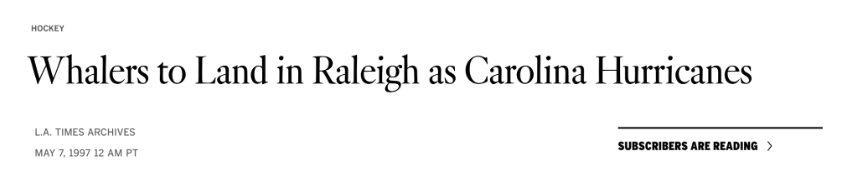
However, the Whalers stadium deals broke down and they announced their departure before they had found a new location.

In a unique turn of events, Raleigh found themselves with funded plans for a brand new arena and an NHL team that was currently homeless. Fate had showed it’s hand, and Raleigh made it’s pitch.

It worked.

Image

But just because they got a team, didn’t mean they’d be able to keep them.

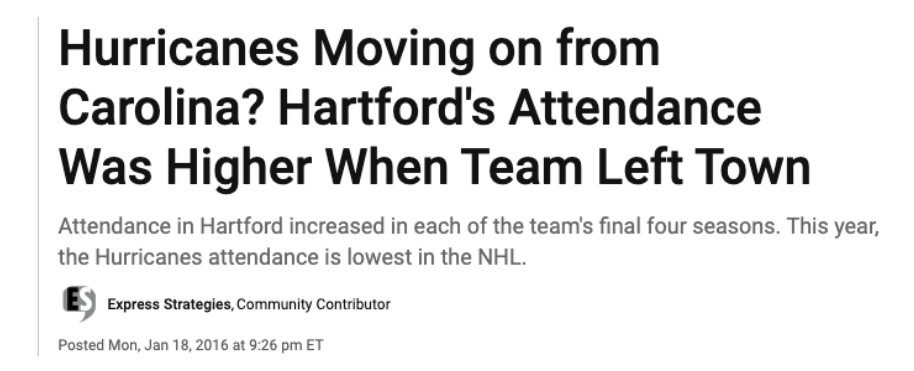
The Canes struggled to attract fans for years, but a Stanley Cup in 2006 gave them new life.

However, even that magic wore off by 2014/15 when attendance dropped back down to near the bottom of the NHL.

Image

Did NHL fail in Raleigh? Was this the end?

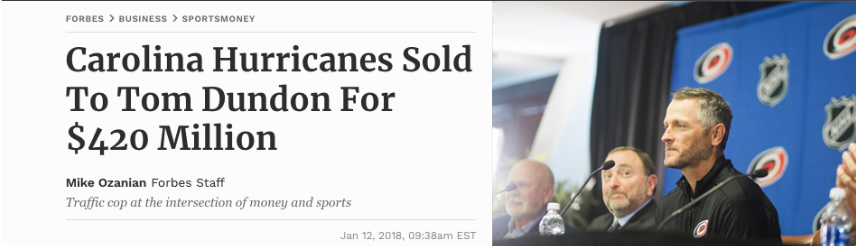
It might have been if they weren’t sold in 2018.

That’s when they were purchased by a guy who had new ideas, was willing to put a real product on the ice, & was coming in during the Triangle’s growth boom.

That owner was Tom Dundon.

Image

Over the next few years, the Hurricanes attendance began to tick upwards.

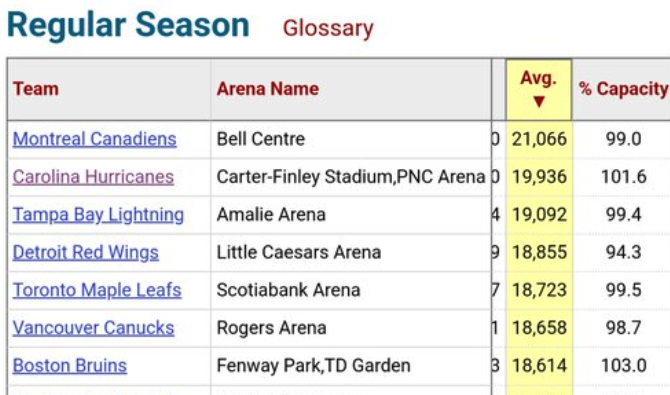
In 2021 they finished 9th in the NHL and just last season the Canes hit #2 in the NHL in average. attendance.

They had made it.

Raleigh was becoming an actual hockey market.

Image

Flash forward to the present.

Raleigh is a potential expansion option for MLB, where you will not be the smallest market.

Where you have a rich state history with the sport.

In a time when we are now the 2nd fastest-growing metro in the country.

But no expansion market is going to be perfect. There will be hurdles and it will take outside-the-box thinking to make it work.

If only you could find a willing billionaire owner who had experience with this type of thing

Oh…

Image

All this to say…hockey will survive (and currently thrive) in the Raleigh for at least 50 years.

We get the Skyhawks and Bullfrogs and other minor of the minor leagues have folded…but the near apples to apples comparison has WORKED.

If the North Carolina MLB lands in Raleigh, what happens to the Durham Bulls?

We fully expect this to be the question on most people’s minds, and rightfully so. We’ll preface by saying, we love the Bulls and believe this can be a win-win for all.

In short, the Bulls aren’t going anywhere.

Prior to last year, within the 218 pages of The Official Professional Baseball Rules Book was Rule 52; Major and Minor League Territorial Rights. While we’re sure you’d love to dig into the nitty-gritty, here is a brief synopsis and series of events that would happen if Raleigh were to get an MLB franchise.

That rule stated that all higher-level teams are granted territorial rights. Whether it’s Single-A versus Double-A or MLB versus MiLB, the top tier gets full rights. If Raleigh were to get a franchise, they would have had the rights to Wake County and the surrounding territory.

With Rule 52, Raleigh would have been able to come in and gain territorial rights, but last year Rule 52 was removed from the rule book.

That said, nothing changes for Raleigh. Territorial rights are now a lot more vague in the rule book but are loosely defined by county lines. At the end of the day, the same rules apply in our case.

So why did MLB remove Rule 52?

Well, they haven’t said, but if you watch what has been going on, you can start to understand.

In 2021 MLB essentially took over Minor League Baseball, which was operating as its own entity. They came in and restructured things, eliminating a few teams and restructuring things in a way where each franchise’s top four affiliates will include one team apiece at Triple-A, Double-A, high-A, and low-A.

After doing that, MLB said that big league teams would be an average of 200 miles closer to their Triple-A affiliates, allowing most to be within driving distance of their parent team.

So how has that played out?

We did a full Twitter (X) thread on this. Check it out…

In short, the last two AAA teams that were added were within 23 miles of their MLB affiliate. (St. Paul Saints/Twins & Sugar Land/Astros) and if the Oakland/Vegas deal goes through, it would make a third, with the Aviators being just 12 miles from the proposed stadium site in Vegas.

MLB said this would be their new strategy and you’re seeing them put that into action. So if Raleigh were to be awarded a team, there would eventually be the option for the Bulls to change affiliates and become the AAA franchise of the Raleigh-based team.

But this strategy is brand new. How do we know it will work? Is there any historical precedence?

There is. Let’s take a look at Seattle.

The Mariners’ Triple-A franchise lies just under 30 miles away in Tacoma, WA, creating a situation much like the one we’d face in the Triangle if Raleigh were to get an MLB team.

The Tacoma Rainiers were founded in 1960 as the Tacoma Giants and played in the Pacific Coast League (Triple-A). In 1977 the Seattle Mariners joined MLB as an expansion team and set up shop just under 30 miles from Tacoma’s ballpark. In 1980 Seattle’s population was checking in at 493,846 (Raleigh’s current population is 464,758); The two have coexisted with no problems and have done well in attendance rankings over the years.

This past season, the Mariners ranked 14th out of 30 MLB teams in attendance (averaging over 28k per game), while the Tacoma Rainiers ranked 30th out of 160 MiLB teams.

Meanwhile, the Durham Bulls remain a Top-10 team year in and year out in MiLB attendance rankings. These numbers suggest, that with our area’s projected growth and their proven popularity, the Bulls could remain in Durham, while Raleigh welcomes a new MLB team.

A Primer on MLB Expansion

Major League Baseball commissioner Rob Manfred has been on record over the past year discussing his goal for Major League Baseball to expand from 30 to 32 teams in the next few years. It’s been 20 years since the last round of expansion welcomed new franchises to Tampa Bay and Arizona. What does expansion mean, how would it work, and how does Raleigh fit into all of this? Let us explain…

MLB Expansion in a nutshell

The current MLB structure is comprised of 30 teams divided into two leagues–The American League and the National League–with each league split evenly into three divisions of five teams (AL/NL east, west, and central). The winners of each division, plus two wild-card teams, advance to the postseason. Like the NFL and, come 2021, the NHL, having 32 teams makes for a tidier combination of divisions, with the most likely scenario being eight divisions of four teams. Would MLB consider eliminating the wild-card? This set up would certainly allow for that, but with the excitement–and revenue–that even a one-game wild-card round generates, it’s likely here to stay in one form or another.

Which cities are set up to get teams and how does Raleigh fit in?

In an interview at the 2018 All-Star Game, Manfred was asked about expansion, and which cities might be in the running. Careful to hedge against naming favorites or creating expectations, he rattled off a list of viable cities that included Portland, Las Vegas, Charlotte, Nashville, Montreal, Vancouver, and even somewhere in Mexico. While these are just an informal list, they gave us a glimpse into what type of markets MLB is looking for.

This was a major reason we started this project. When looking at these markets, we saw that our area was currently right there with some of these cities in terms of population, income, and media market size. We saw that the Triangle’s projected growth rates were much higher than some of these places, meaning a Raleigh-anchored team in the Triangle is viable today but would be nearing a mid/large market team in just 15-20 years.

With expansion talks gearing up, and North Carolina listed as a possible target, we believe the time is now to get organized and start showing that Raleigh and the Triangle are actually the best long-term choice for MLB expansion in the United States.

What about a ‘relocation’ team’?

As stated in the above video, there are two MLB teams that could possibly be relocating to new cities. Oakland has a proposed new stadium which looks great, but there are still a lot of discussions about funding that need to happen, so this is in no way a done deal.

Meanwhile, things are looking even more bleak in Tampa where stadium funding discussions fell through, leaving it looking more and more likely that the Rays will need a new home in 2028.

The big takeaway here is that there are potentially 4 cities that could have new MLB teams in the coming years. This type of turnover doesn’t happen much in professional sports, and since Raleigh recently missed on MLS,  MLB is likely their last chance for professional sports for the foreseeable future.

If we want MLB, the time is now for us to get organized and start the push.

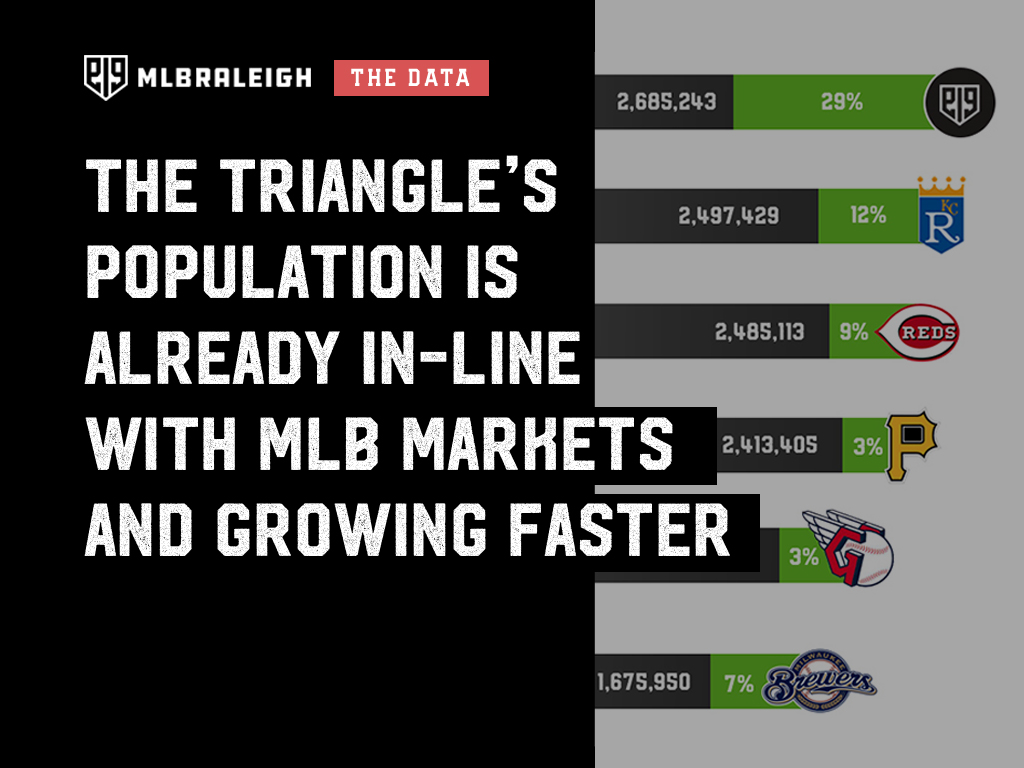
The Triangle’s population is already in line with MLB markets and growing faster

What if we told you that in 15 years, the Triangle would bypass every small-market MLB metro in population? Would you believe us?

Well, it’s true & it’s time we talk about it.

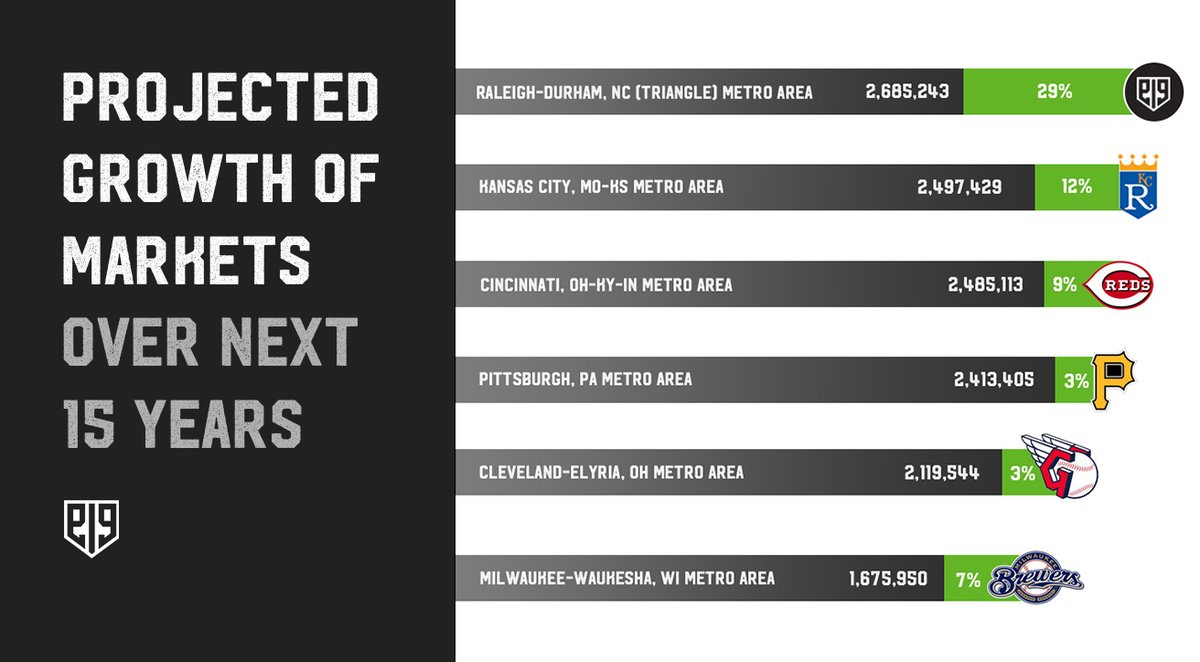
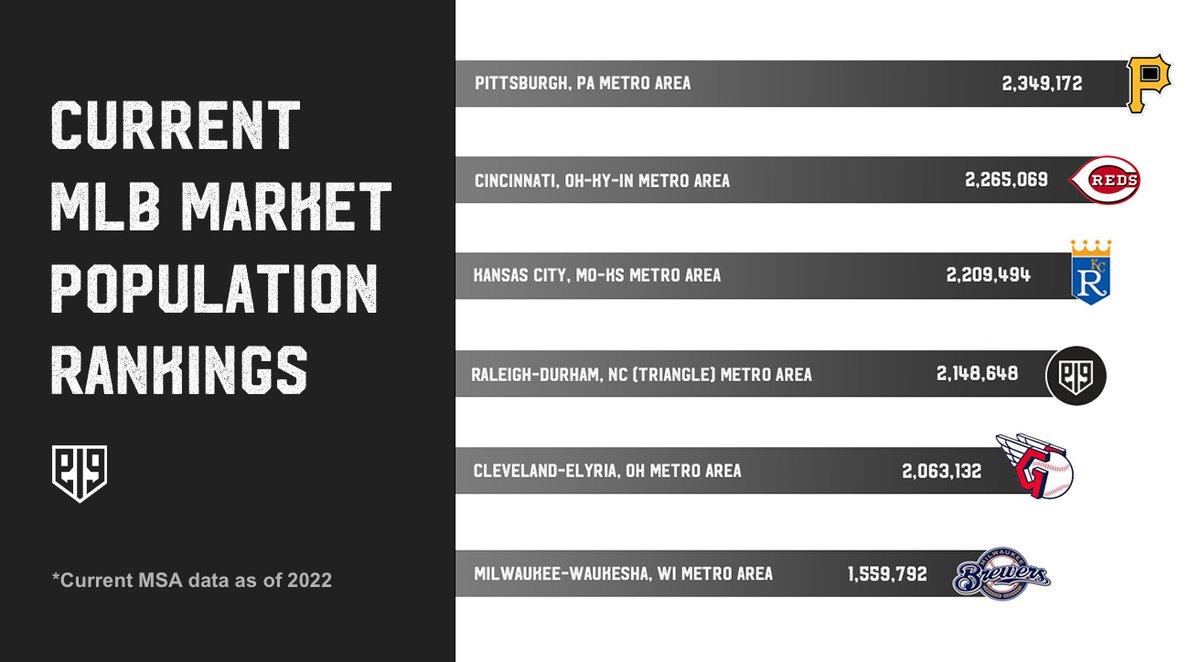
Today, the Triangle population sits at 2,148,648, right in the middle of small-market baseball. Above Milwaukee & Cleveland, and just below KC, Cincy & Pittsburgh. MLB is already viable here, but MLB isn’t investing for today…

MLB is investing in the future, and that’s where The Triangle stands out. Our metro area is growing FAST! According to the 15-year growth projections of each market, the Triangle will rank above all of MLB’s small-market metros by 2037 (moving us just behind St. Louis).

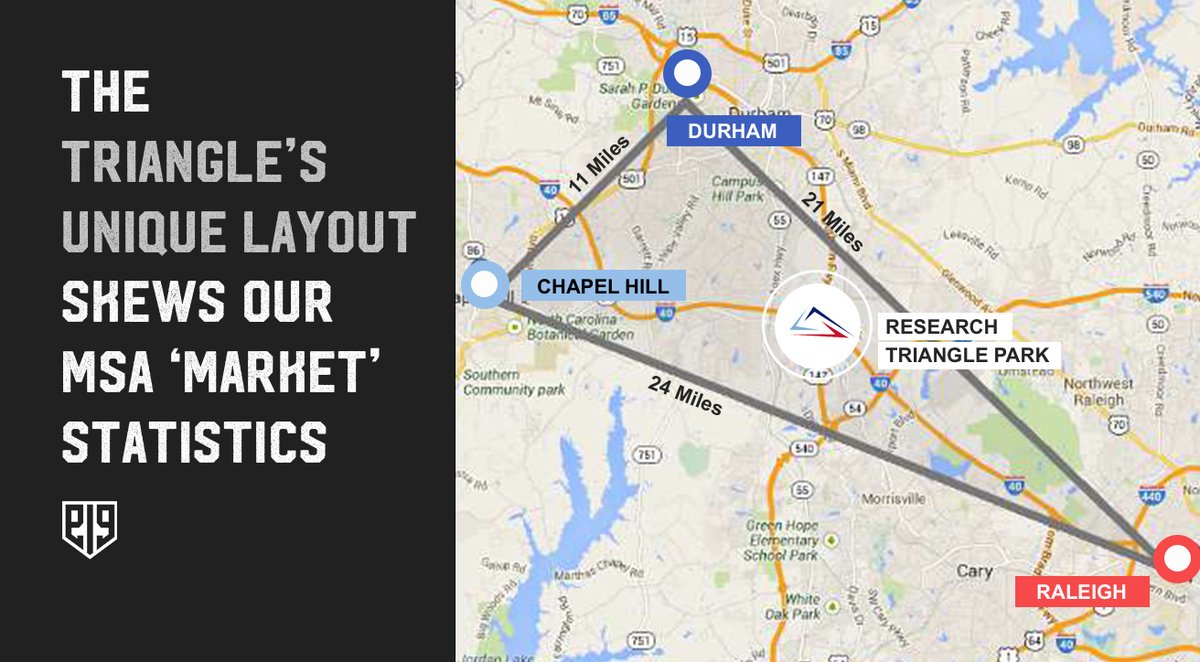
If those numbers are blowing your mind, you’re not alone. Measuring our population in comparison with other metros that support MLB sounds easy. But thanks to arbitrary definitions that don’t take into consideration the Triangle’s unique setup, it’s actually quite complicated…

The stat most used to measure the population size of a ‘market’ is called MSA (metro statistical area). MSA boundaries are based on ‘commute interchange’ or how many people commute into your area. The unique setup of The Triangle, with RTP in the middle, skews this stat.

But as you’ve begun to see, the secret is getting out.

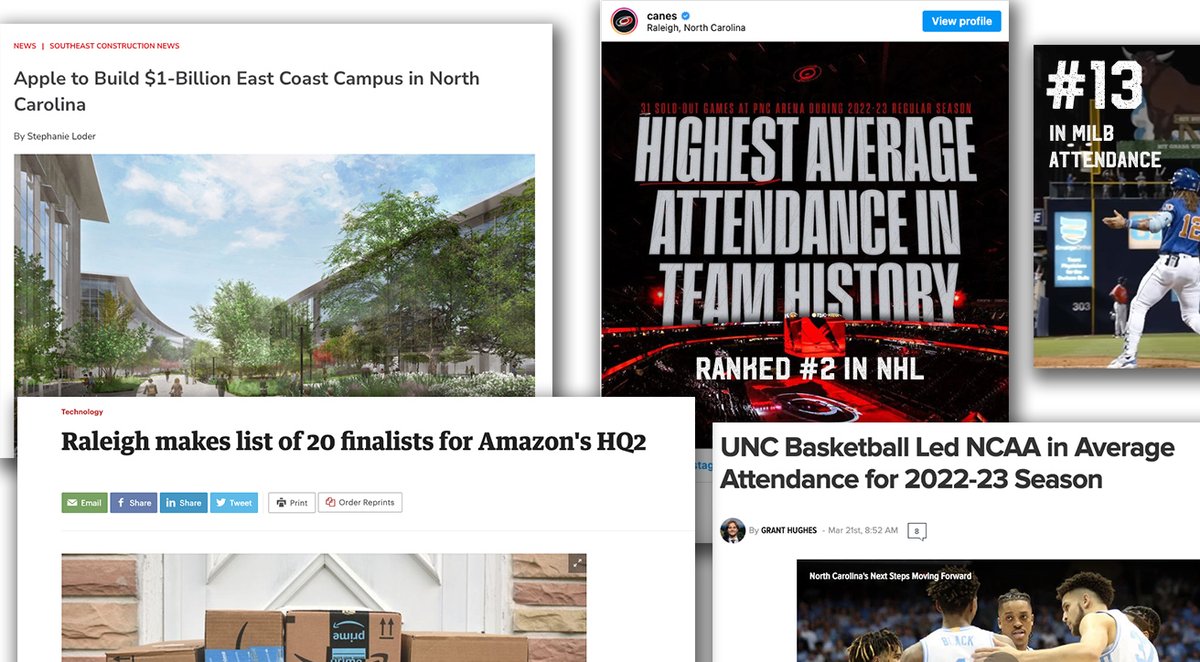
We were a finalist for Amazon HQ and landed Apple’s East Coast Campus. Our college sports teams continue to set attendance records, the Bulls continue to finish top 15 in MiLB & the Canes finished 2nd in the NHL.

This market has been a hidden gem for decades, and people are finally starting to take note … Just in time for us to introduce ourselves to the world with a loud and compelling pitch for an MLB franchise. 

How the ‘NC Sports Betting Bill’ helps the MLB2NC Bid

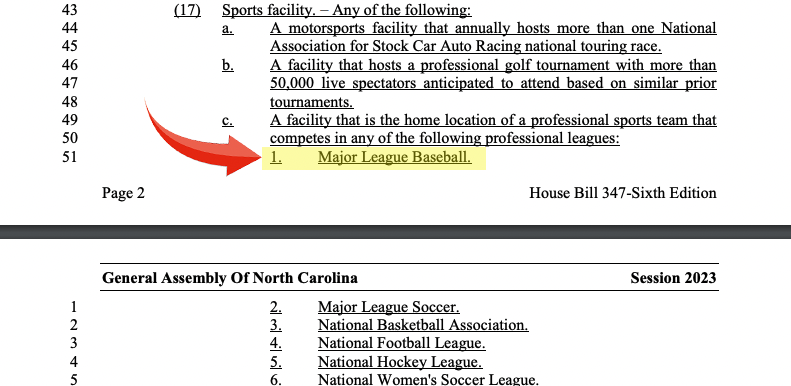
In early June, 2023, North Carolina passed House Bill 347, legalizing online sports betting and retail sportsbooks (and names ‘MLB’ in the bill). This is more positive news if you’re rooting for North Carolina to land an MLB franchise.
Here is why…

Sports betting has become a key revenue stream for pro teams. The NFL saw a 40% increase across teams & sports gambling deals have quadrupled in the past 4 years. 25+ NFL teams have at least one Sports Betting sponsor. And now MLB is getting in on the action…

According to a Nielsen study, MLB stands to gain $1.1 billion per year once sports gambling is fully mature. MLB understands this and is actively promoting these relationships, according to economist Andrew Zimbalist (Forbes).

“If more people are betting, more people are watching, and that raises TV revenue.”….“If you’re going to further build a fan base, sports betting is going to do that.” says Zimbalist But there’s one caveat…

The one caveat is that sports gambling isn’t legal everywhere, & in some states, a bill legalizing it may never be passed. If you were MLB, and you were expanding or relocating, wouldn’t you want to prioritize locations where you KNEW you could extract the highest revenue?

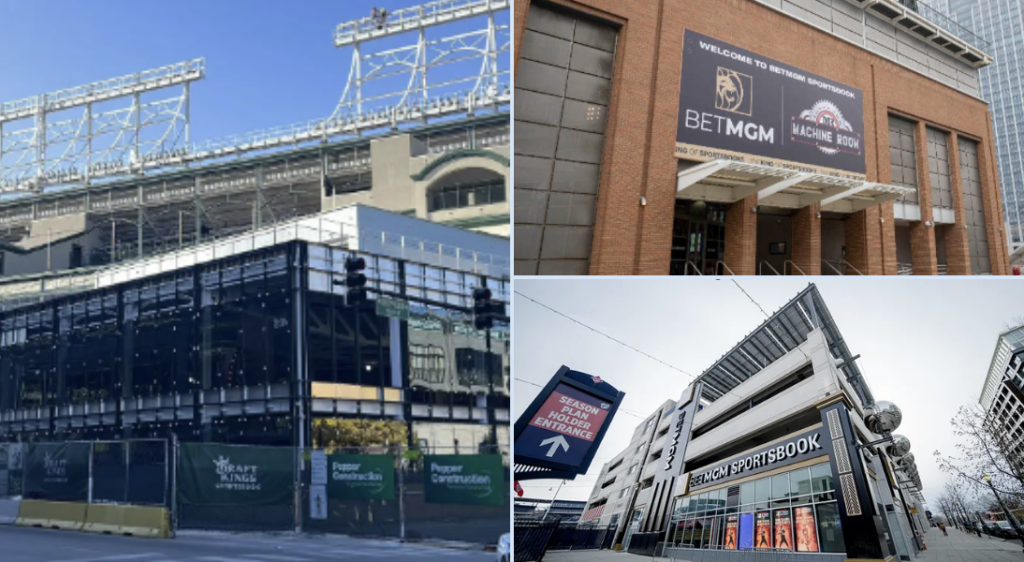
You already are seeing MLB tap into this potential. BetMGM now has a sportsbook inside the Reds and Nats Parks, while Draft Kings just opened at Wrigley (Cubs). This trend will only continue & it’s likely MLB will prioritize any new location where this is legally possible.

Which brings us to NC’s ‘House Bill 347’. The bill not only legalizes digital sports betting, but it allows retail sports books at a number of different locations defined within the bill.

Here are the facilities that will be allowed to host retail sports books…

  • Bank of America Stadium
  • Spectrum Center
  • Charlotte Motor Speedway
  • Quail Hollow Country Club
  • North Wilkesboro Speedway
  • PNC Arena
  • WakeMed Soccer Park
  • Sedgefield Country Club

Oh and they left some wiggle room for the future that you & MLB may be interested in…

If you turn to page 2 of the bill, you can see that they outright listed an MLB stadium as a legal location for a retail sportsbook. But there isn’t an MLB stadium in the state at this moment.


So why even add it?

When MLB is ready to expand & when we make our pitch to get a team, there will be no questions, no votes, no legal battles for the incoming team to have a sportsbook on-site. It’s baked in. And while it won’t be THE deciding factor, it certainly helps NC stand out.

Let’s look at the competitors and their state’s stances on retail sportsbooks & sports betting…

• Tennessee (Nashville): No retail, just online
• Oregon (Portland): Only Draft Kings online and only retail at Tribal casinos
• Utah (SLC): None
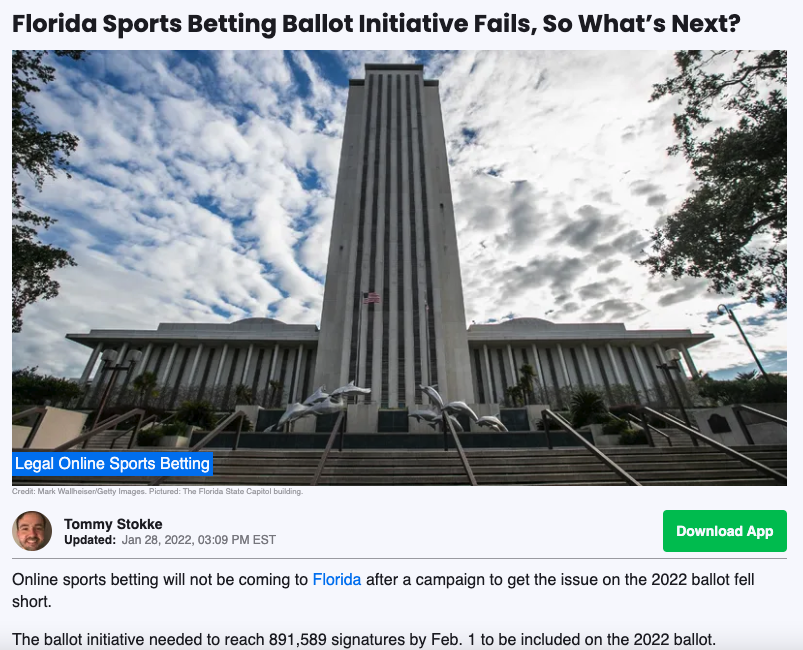
• Florida (Orlando): None

So, we’re sitting in MLB’s largest east coast dead zone with stadium-zoned land near DT Raleigh. Our pop + media market is in-line & growing fast, & now our state offers MLB an avenue to max revenue with HB 347.

Right now, no MLB expansion competitor can say all of that.